
Our Advice on Underfloor Heating and Screed
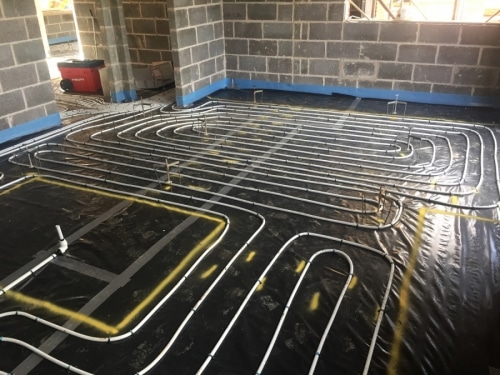
At Screed It, we understand the need to keep any work scheduled for a project as quick, efficient, and cost-effective as possible. That is why we’ve provided some professional advice on underfloor heating and screed, how the two should be installed together (including minimum and maximum levels of screed thickness), and what you can do to ensure best practice when carrying out the work.
What is Underfloor Heating?
Underfloor heating (UFH) is a method of heating any interior space by generating heat underneath the floors of the property. It can be used simply to warm up the floor or it may even replace radiator systems entirely and become the primary source of heat indoors.
When you install underfloor heating, you will normally have the option of two system types. These are electrical systems and water systems. An electrical underfloor heating system will use cables to generate heat, while water-based underfloor heating systems will pump heated water through a series of pipes underneath your top floor layer.
Installing UFH Systems Underneath Screed
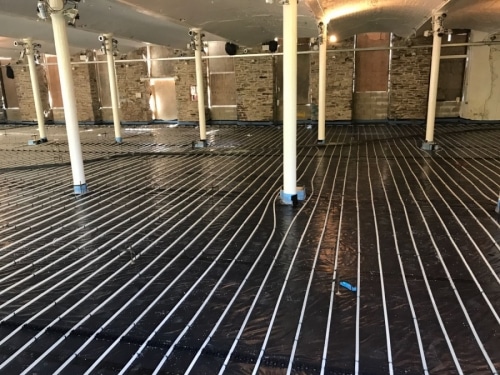
Starting from the bottom, a subfloor will consist of either a concrete slab or a beam and block which is then insulated by a waterproof membrane. This membrane should then be covered with a layer of thermal insulation. In most cases, this will either be polystyrene or mineral wool. There may also be occasions where it will be necessary to fit vapour insulation over the original thermal insulation layer.
After this, the underfloor heating pipes can be fitted. These should be laid on the floor evenly, avoiding sharp bends if possible (as water-based pipes will need to maintain a free flow), and set out in a loop to ensure an even distribution of heat. The pipes should be fitted to the underlay with clips.
Once everything is in place and prepared, it will then be possible to install the screed mix that’s been chosen for the floor. This will then be left to dry, and a flooring of the homeowner or contractor’s choice can be laid to cover it over. Some may also choose to leave the screed exposed, as a stylish floor finish.
What is the Best Screed for Underfloor Heating?
There are two types of screed that can be installed around underfloor heating. Neither can be considered “best” for an underfloor heating installation, as they offer the same advantages when installed correctly. However, when considering an installation, you should always take into account the type of screed being used in order to allow room for thermal movement and expansion in the pipes.
We have provided some more information on the two types of floor screed mix below:
Traditional Floor Screed
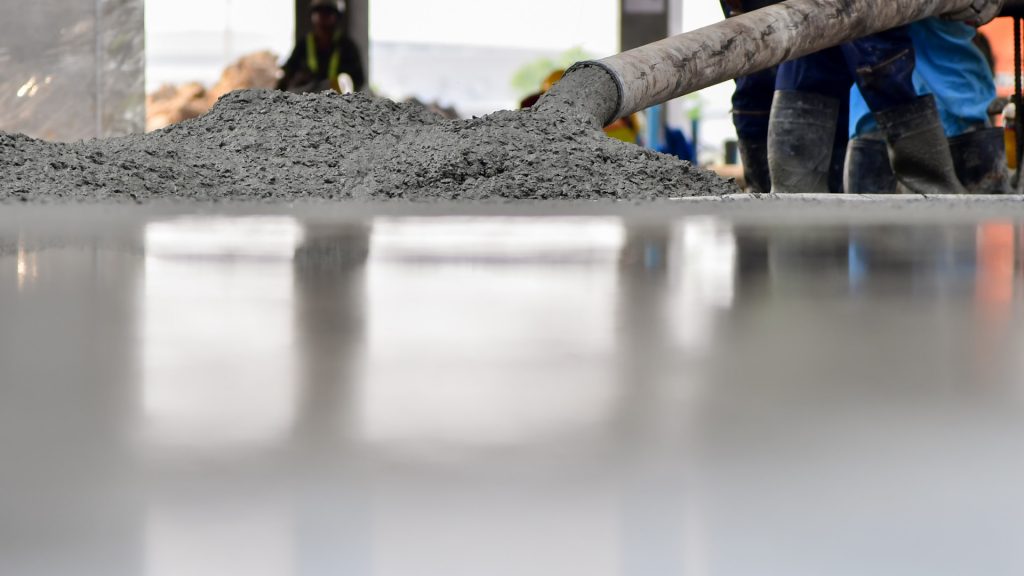
Traditional sand and cement screeds, also called “dry screeds”, are a mix of coarse sand and cement. The ratio of sand to cement may vary depending on the contractor, but the average is normally noted as a 4:1 ratio mix. It also needs enough water to reach the required consistency without getting so wet that it will produce more than a few drops of moisture when squeezed.
Drying times for traditional types of screed will normally range between five and seven days.
A traditional floor screed will need a minimum of 28 days before the heating can be switched on, and the UFH system should be run at a low temperature at first to let the screed heat up. This assists in completing the cure before the heating is brought up to its full running temperature.
Liquid Screed
Also known as “flowing screeds”, liquid screeds are often considered a faster, more efficient alternative to traditional sand and cement screeds. This is because liquid screed can be supplied to a building project and simply poured into the space it needs to be installed. From there, the compound mix will harden by itself and form a smooth, flat surface. This is why they are often called self-levelling screeds as well.
If you are looking to finish a work project quickly, liquid screed is often the best choice. It can often be walked on within 24 to 48 hours of being installed, though it will take longer to cure than traditional screed.
Underfloor Heating and Screed Depth
It is especially important to keep to the recommended thickness of a screed layer, as the depth of the pipe determines how effectively the UFH system will distribute its heat. The thickness of the layer also varies, depending on whether you are using traditional sand and cement screed or liquid screed.
Ideally, a traditional sand and cement screed will have a minimum thickness of 65mm and a maximum thickness of 75mm. No matter the measurement chosen, this should be consistent throughout the work to keep the heat distribution the same.
As liquid floor screed can be installed in thinner layers than traditional screed, the minimum depth of the layer can be as little as 50mm or 55mm.
Preventing Issues with Underfloor Heating and Screed
When installing underfloor heating and covering it with a screed layer, there are a few other points to follow to ensure best practice:
- You should ensure that the process takes installations that penetrate floors into account
- You should always be aware of the maximum temperature of the floor surface, particularly if you are planning to install tiles above the screed
- Insulating the primary pipework and the manifold assemblies is highly recommended
- You should also be sure to locate the manifold assemblies so that they are easily accessed
- The correct labelling should be applied to all features in a UFH system, in order to keep inspections and maintenance efficient
- Joints between the manifold and pipework should be accommodated above the level of screed for easy maintenance
- Manifolds should be located at an appropriate height above the floor, securely fastened to the wall
- All external doors and windows should be installed before any UFH system, so that the property is watertight and the system is protected from frost
- The spacing and layout of the pipework should be even, but may be reduced around the external perimeter of rooms to compensate for additional heat loss that often occurs in these areas. Insulation will need to be installed from the floor to the edge of the walls
Underfloor heating pipes can be laid out in several patterns. The most appropriate layout for any particular system should be confirmed by the manufacturer.
If you don’t have the necessary experience to install underfloor heating with a screed layer to finish, we would strongly recommend calling a specialist service to undertake the work for you. This ensures that the work is handled correctly and will save you time and money that might otherwise be spent ripping up the screed floor and uninstalling the system if it goes wrong.
Contacting a Professional Screeding Service
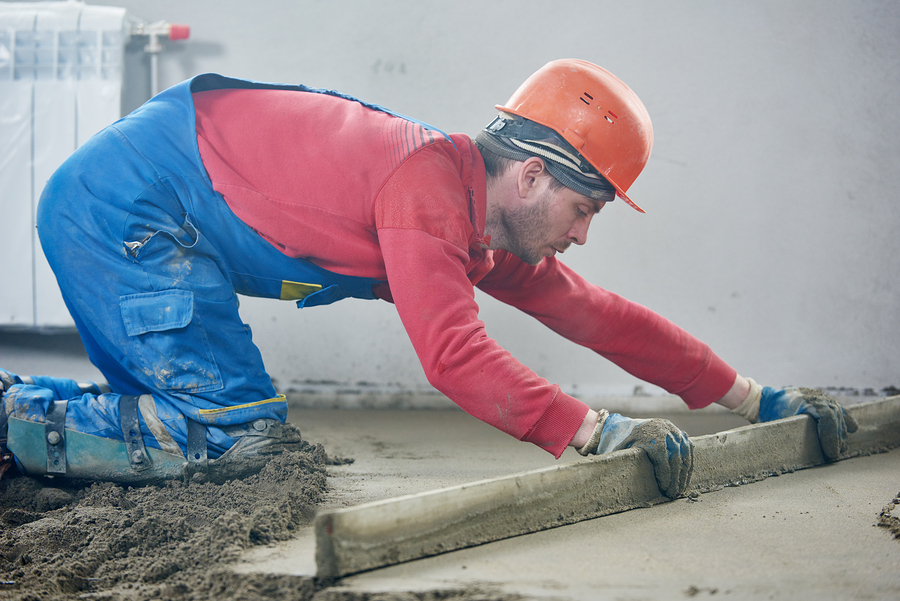
If you are in need of fast and efficient screeding and underfloor heating services to complete your work project, contact Screed It today. We’ll do everything we can to provide you with the wet UFH system that keeps any property at its most comfortable temperature, and can ensure an installation is carried out exactly as you need. We will then finish the flooring with a layer of screed that suits the needs of your planned work.
We’ll be happy to carry out this work anywhere in the UK, and one of our members of staff will be ready and waiting to discuss everything you need as soon as you get in touch.
Casinacho Casino: Vollstandige Rezension.Casinacho Casino: Vollstandige Rezension Casinacho Casino ist eine der fuhrenden Online-Glucksspielseiten, die Spielern eine breite Palette von Spielen und Unterhaltungsmoglichkeiten bietet. Das Casino Casinacho casino wurde im Jahr 2015 gegrundet und hat sich seitdem einen guten Ruf in der Glucksspielbranche erworben. Das Casino bietet eine Vielzahl von Spielen, darunter Spielautomaten, Tischspiele, Live-Casinospiele und vieles mehr. Die Spielautomaten sind von fuhrenden Entwicklern wie NetEnt, Microgaming und Play’n GO. Es gibt Hunderte von Spielautomaten zur Auswahl, darunter beliebte Titel wie Starburst, Gonzo’s Quest und Book of Dead. Die Tischspiele im Casinacho Casino umfassen Blackjack, Roulette, Baccarat und Poker. Es gibt auch eine Vielzahl von Live-Casinospiele, die von echten Dealern geleitet werden und ein authentisches Casinoerlebnis bieten. Das Casino bietet auch eine Vielzahl von Boni und Werbeaktionen fur seine Spieler. Neue Spieler erhalten einen Willkommensbonus, der ihnen zusatzliches Geld zum Spielen bietet. Es gibt auch regelma?ige Aktionen wie Freispiele, Einzahlungsboni und Cashback-Angebote. Casinacho Casino bietet eine sichere und faire Spielumgebung fur seine Spieler. Das Casino ist von der Malta Gaming Authority lizenziert und reguliert, was bedeutet, dass es strenge Vorschriften einhalten muss, um sicherzustellen, dass alle Spiele fair und transparent sind. Das Casino verwendet auch eine sichere SSL-Verschlusselung, um sicherzustellen, dass alle Transaktionen und personlichen Daten geschutzt sind. Der Kundensupport im Casinacho Casino ist ausgezeichnet und steht den Spielern rund um die Uhr zur Verfugung. Die Spieler konnen das Support-Team per Live-Chat, E-Mail oder Telefon kontaktieren und erhalten schnell und effizient Hilfe bei allen Fragen oder Problemen. Insgesamt ist Casinacho Casino eine hervorragende Wahl fur Spieler, die nach einer sicheren und unterhaltsamen Online-Glucksspielseite suchen. Mit einer breiten Auswahl an Spielen, gro?zugigen Boni und einem erstklassigen Kundensupport bietet das Casino alles, was Spieler brauchen, um ein erstklassiges Spielerlebnis zu genie?en. Besuchen Sie noch heute Casinacho Casino und erleben Sie die Spannung und Aufregung des Online-Glucksspiels!